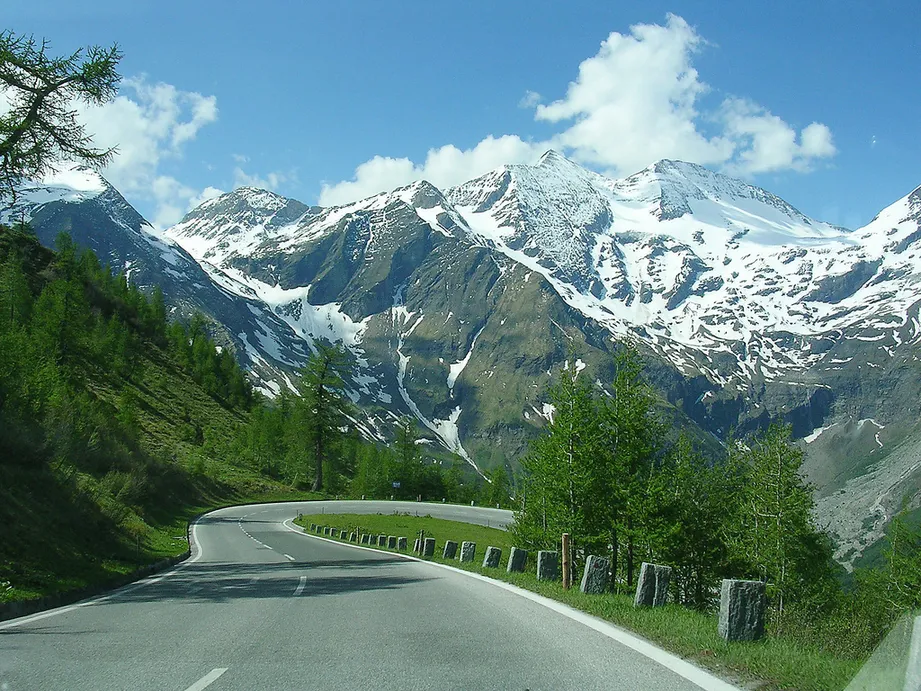
Every July and August of my childhood began the same way. The car was loaded the night before, and the following morning we drove – ten to twelve hours in one direction across Europe – to a rented house or apartment in Italy, Austria or Switzerland. Never the same one twice, and always somewhere chosen months earlier. One destination. Weeks rather than days. A decision made so far in advance that the anticipation became part of the holiday.
It is this time of the year again. In much of the world this is the season for travelling, and for those whose own trip is still ahead of them, the season for deciding where it will be. The trip to discover something, the trip taken to relax and rejuvenate, the family trip, the short one squeezed between two working weeks.
People want to travel as much as they ever did. How they go about it has changed, and hotels now have to staff, prepare, and serve according to a different pattern.
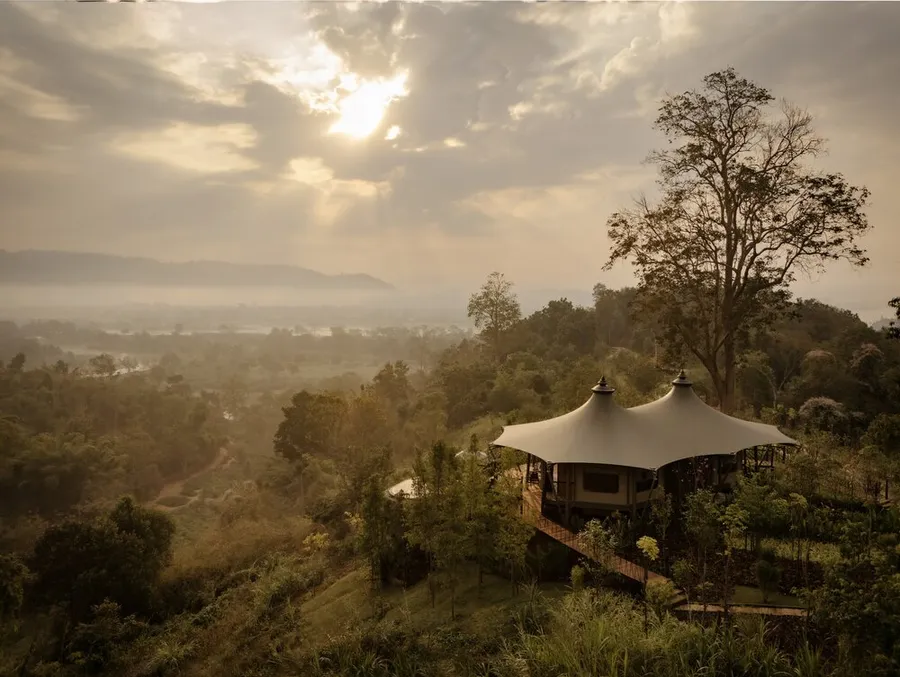
The holiday season has come apart on both sides of the world
The fixed summer block I grew up with is being unpicked from two directions at once.
In Europe, the reason is heat. Jenny Southan of the foresight agency Globetrender describes a move from a sun-seeking economy to a comfort-seeking one, with travellers choosing higher altitudes over lower latitudes and experiencing southern Europe in spring, autumn and winter instead of the intensity of August. Shoulder seasons are becoming the new peak.
In Asia, the reason is cost. Google's hotel search data across six Southeast Asian markets shows the highest relative volume of searches for check-in dates now falling in April and May, moving away from June and July, which led in 2023. Rising flight and accommodation prices are pushing travellers to the edges of the calendar.
Two continents, two mechanisms, one outcome.
The supply side tells the same story from the other end. JLL reports that the occupancy gap between luxury and mainstream hotels across Asia-Pacific is narrowing, which it reads as a signal that luxury properties are becoming year-round performers rather than seasonal ones.
What this means for hospitality. A great deal of operational planning assumes a peak that arrives on schedule and a trough that follows it. Seasonal hiring, training cycles timed to quiet months, programming built around school holidays, and rate strategies anchored to a summer high. Where the peak flattens into something more continuous, the quiet period that absorbed preparation stops existing.
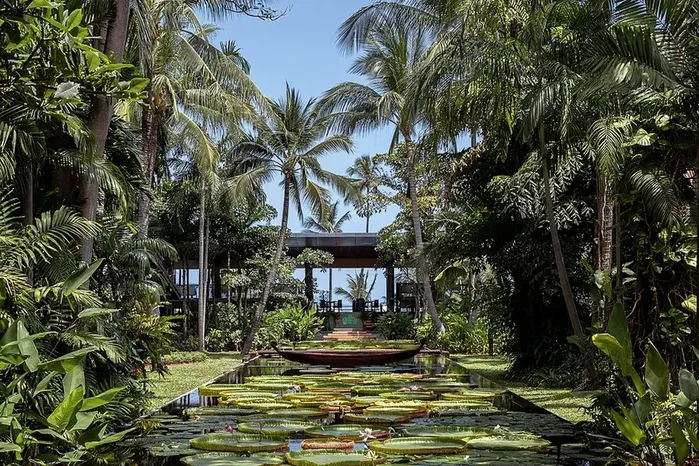
Asia became the destination as well as the source market
My own travel took a long time to arrive here. I was seventeen before I flew anywhere, and the flight took me west, to New York. For years afterwards, everything pointed the same way – Europe and North America, the assumed direction of an ambitious itinerary.
My first trip to Asia was in 2005, to Thailand. It reversed my orientation permanently, and I have spent the two decades since working and travelling across the region rather than looking west.
The regional data has now moved the same way. Marriott's 2026 study of high-net-worth travellers across eight Asian markets found planned travel within the Asia-Pacific gaining prominence while planned travel to every other region declined, with Indonesia climbing from outside the previous top ten to second place and Southeast Asia occupying much of the new ranking.
Visa's transaction data covering 2025 points in the same direction with different instruments. Japan attracted more than double the travel spending of any other Asia-Pacific destination while growing by more than 25%, and South Korea moved past Australia and Thailand into second place regionally.
What this means for hospitality. The assumption that aspirational Asian travel eventually points towards Europe had a long life and a definite expiry date. Asia now supplies its own aspiration, its own comparison set and its own standard of what a luxury stay should feel like. A property in the region is increasingly judged against another property in the region.
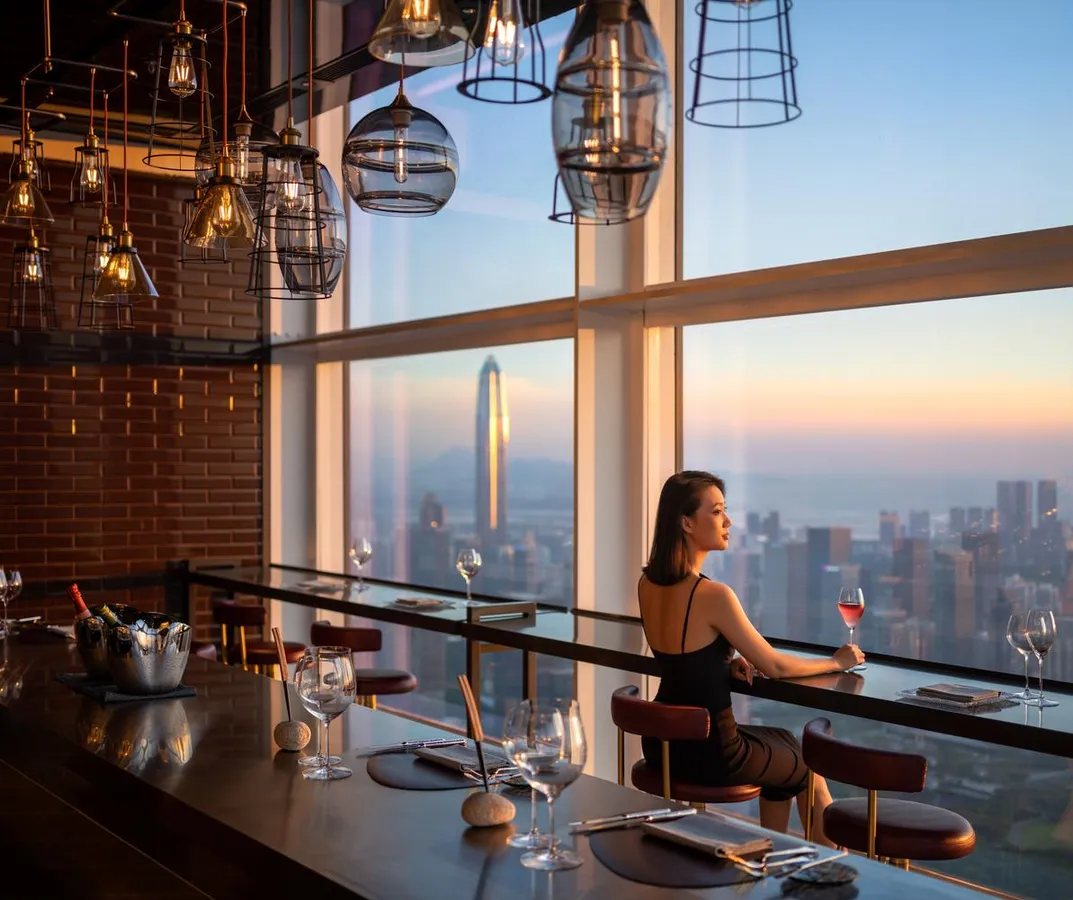
Luxury travellers in Asia now decide close to departure
The clearest evidence in all of this comes from one publisher across twelve months, which removes most of the usual argument about methodology.
Marriott's 2025 report on affluent Asian travellers described a mindset marked by increased precision in itinerary planning. Its 2026 successor, drawn from the same research family, describes something close to the opposite. Long leisure trips booked within two months of departure rose from 28% to 52% in a single year. Bookings placed three to six months ahead fell from 29% to 18%. Ninety per cent of respondents reported having booked a trip within a fortnight of travelling.
Two things are happening at once, and they are easy to confuse. Trips are getting longer – the average international long-haul stay moved from seven to nine nights – while the decision to take them arrives later. Travellers are consolidating into fewer, deeper journeys and choosing them at shorter notice.
Work is part of the reason. Eight in ten travellers now combine business and leisure on international trips, matching the domestic rate. In Indonesia the figure reaches 87%, in Thailand 86%, and in Vietnam 82%.
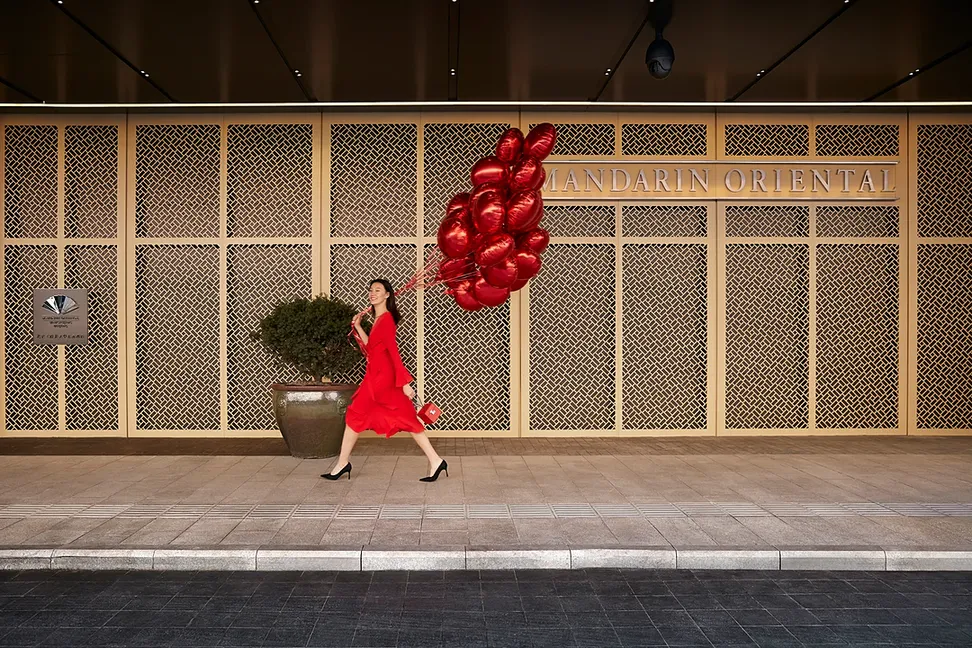
Shenzhen shows what that looks like when a city is built around it. China's technology capital added 47 billionaires in a single year to reach 132, second only to New York, and international luxury operators have followed. The St Regis in Bao'an reports its largest guest group as mainland Chinese travellers aged 25 to 45, who routinely combine business and leisure rather than separating them. The Mandarin Oriental in Futian reports 42.8% of its visitors arriving from overseas. A luxury hospitality economy running substantially on executives who came to work.
What this means for hospitality. The trip is increasingly assembled around a working commitment, close to the date, rather than set aside months in advance. The guest who books eleven days out is now ordinary rather than exceptional.
Expectations rose while the time to meet them shrank
Here is the part that should concern anyone running a property.
While the decision window was halving, expectation was moving the other way. In the same 2025 study, 93% of affluent Asian travellers said they expected every detail of their trip to be tailored, up from 83% the year before.
Set those two lines beside each other. The guest expects more preparation and provides less time in which to do it.
Almost everything a hospitality business does well at the concept level assumes notice. The plan needs approval. The rollout needs a pilot. The standard needs writing, translating and training. The refurbishment needs a quiet season. All of it is sound work, and none of it moves at the speed of a guest who decided last Tuesday.
Concepts are one thing. What closes the gap when the notice disappears is ownership.
This is where I use my PPP / PPC framework – 'Plan per Prospect' and 'Plan per Customer' – one of five proprietary frameworks I have developed to align client understanding, frontline capability, process and execution in luxury retail and hospitality. Its purpose is to ensure that every prospect and every client has a clear next step, a defined intent behind that step, and a named person responsible for it.
The two halves address different people. A prospect is someone who has shown genuine interest without yet completing a transaction and who can still leave. The plan for that person exists to keep them engaged and to convert them into a guest. A customer, in hospitality a confirmed guest, needs a plan of their own: individual, beginning well before arrival and running the length of the stay, shaped by whether they are travelling alone, with immediate family, or with a small group of friends.
In practice it means the property knows two or three steps ahead what it intends to do for each name on the list and why. Behind the scenes it is a system, and it scales. In front of the guest it reads as attention, because the higher the tier, the more quickly anything generic is recognised for what it is.
One concrete example makes the point. A guest books eleven days before arrival. Under a concept-led model, that guest receives whatever the standard provides, because nothing bespoke can be built in eleven days. Under PPP / PPC, that guest has a named owner from the moment the booking lands, and that owner has a defined next step – one contact, with a purpose, before arrival – rather than a sequence of automated messages that ask the guest to do the coordinating.
What this means for hospitality. Where lead time disappears, ownership replaces it. Someone has to hold the guest, and that someone has to have a plan.
The frustrations that spoil a luxury stay are mostly behavioural
When affluent travellers in Asia were asked what spoils a trip they have paid a premium for, the answers were remarkably consistent and remarkably unglamorous.
Wasted time led at 38%. Average service followed at 37%. Accommodation failing to meet expectations came third at 36%.
The top two cost nothing to fix. Wasted time and average service are behavioural, and both are addressed through capability rather than capital. The third sits differently: accommodation is the asset, and where a room genuinely underdelivers, the answer is investment. What the wording points to, though, is a gap – the distance between what a guest was led to expect and what arrived. Part of that distance is built. Part of it is set by how the property presents itself and how the stay is handled once the guest is in the building.
Lost luggage sits below the three at 25%. Being unable to secure a table at a specific restaurant sits at 23%. Both are matters of anticipation.
A second finding underlines it. Fully personalised travel plans, the kind traditionally assembled by a concierge or agent, fell from 30% to 18% year on year, while independent itinerary planning rose from 36% to 45%. Yet guided tours rose over the same period, from 29% to 33%.
Travellers are rejecting the package and paying separately for the person. They want to shape their own days and to draw on genuine local expertise at the points where it adds something. The judgement, the knowledge and the access remain valuable. The pre-assembled itinerary has lost its appeal.
This is where I use my PEARL framework, which develops frontline capability across product knowledge, empathy, adaptability, relationship building and leverage. It exists because client engagement is a coachable skill rather than a personality trait, and it combines commercial acumen with human understanding. Empathy and adaptability matter most in the situation this article describes, because both operate in real time. A team member who reads a guest accurately in the first minute needs no advance notice to do it.
What this means for hospitality. Most of what damages a luxury stay is behavioural, and that portion is fixable without capital expenditure. Where the asset itself falls short, the gap between promise and delivery can still be narrowed from both ends.

Nationality narrows the field, and motivation identifies the guest
Where a guest comes from tells a property a great deal, and it stops well short of telling it enough.
Mastercard's transaction analysis of visitors to Japan shows what the first part is worth. British visitors direct more than 10% of their spending into land travel. Singaporean visitors put 38% into retail. Korean visitors run a bar-spending share 45% above the average tourist's. One destination, three source markets, three visibly different holidays, and useful guidance for anyone planning inventory, partnerships or food and beverage mix.
The limit appears as soon as an individual walks in. Marriott's segmentation of its Gen Z cohort – 1,200 affluent travellers aged 18 to 29, drawn evenly from the eight markets surveyed – it identifies four distinct motivational groups.
Connoisseur Traditionalists, the largest at 34% of that cohort, read 'luxury' as quality, service and status and gravitate towards flagship properties, acclaimed restaurants and recognition.
Future Proofers, at 30%, treat a trip as an investment in long-term health and preventative care.
Quiet Luxurists, at 20%, define luxury as privacy and stillness and place real value on being unreachable.
Cultural Reclaimers, the smallest at 16%, travel to connect with their own Asian heritage and to strengthen bonds across generations, judging a trip by what they learn about a place.
All four groups exist within every market surveyed. What changes is the mix of travellers. Among affluent Singaporean Gen Z travellers, 42% are Connoisseur Traditionalists against 11% Cultural Reclaimers. In Vietnam, the same split is 28% and 24%. Two source markets a short flight apart, requiring visibly different propositions – and even in Singapore, where one group dominates, most arrivals belong to one of the other three.
The same divergence appears on something as basic as whether a guest wants somewhere new. In India 91% intend to visit a destination they have never been to, in Singapore 88%, and in Australia 87%. In Thailand 64% prefer returning to the familiar, and in Indonesia 52% do.
Japan offers the sharpest illustration of the risk in reading this wrongly. The country is building the deepest wellness infrastructure in the region – the Pasona Natureverse retreat opened on Awaji Island in June, with sleep and nutrition programming and a medical support programme developed with Kobe University Hospital; Halekulani Okinawa expands its longevity retreat in October; and Saishunkan Pharmaceutical opened a tourism division in April, partnering with hotel groups including Hoshino Resorts. Yet Japanese travellers hold the lowest share of Future Proofers of any of the eight source markets surveyed. That infrastructure is being built for people who live somewhere else.
This is where I use my 360 Client Mapping tool, which moves teams beyond surface segmentation to a complete view of who a client is, why they buy, what they buy, what they feel and how they want to interact. It applies directly here, because origin and age describe the population a guest belongs to, while motivation explains the trip they have actually come to take. It also pairs naturally with PPP / PPC: knowing why a guest is coming makes it far easier to define the right next step for them.
Reading a market correctly is the first half of the problem. Moving what one market learns to the teams in the others is the second, and it is where regional organisations most often lose the value they have already paid for. This is the work of my LINK framework, which integrates teams, aligns roles and ensures that insight travels rather than staying where it was generated. Applied here, it means a property in Bangkok knowing what its counterpart in Ho Chi Minh City has learnt about the same guest profile and acting on it.
What this means for hospitality. A single regional programme rolled across eight Asian markets will land correctly in perhaps two of them. Reading each market as its own audience is the difference between relevance and expensive noise.
Luxury hotels spend far more on service – and still match the market on profit
There is a fair objection to everything above. Higher staffing levels and deeper personalisation cost money, and every property has a margin to protect.
Two findings, from firms with no stake in making the argument, answer it directly.
JLL's analysis of luxury hotels across the Asia-Pacific region found that operating costs run significantly higher than in the broader regional market – in some cases close to double – driven by elevated staff ratios, premium food and beverage, and highly personalised service. Those properties nevertheless deliver gross operating profit margins broadly in line with the overall market. The investment market has drawn its own conclusion: regional luxury hotel transaction volumes rose 77% between 2017 and 2025 to approximately USD 2.1 billion, with luxury accounting for almost 20% of all hotel deals in 2025 against 8% in 2017.
The second finding comes from retail rather than hotels, and it may be the most instructive of the lot. Oliver Wyman reports that more than 75% of Chinese luxury spenders now maintain regular contact with their local sales associates, and that as domestic service standards have risen, those relationships have become a genuine pull factor back towards the home market. A named person who knows a client is now outperforming a cross-border price advantage.
Guest preferences point the same way. Boutique hotels and resorts rose from 39% to 51% in stated preference year on year, and private villas and residences from 40% to 46%. Marriott's own reading is that room configuration and food and beverage designed around couples and families have stopped matching demand, with 51% of affluent Gen Z travellers planning trips with immediate family, 51% with a group of five or fewer friends, and 31% travelling solo. A group of friends wants adjacency and shared space, and that is a decision taken before arrival.
What this means for hospitality. Spending more on people is commercially defensible rather than indulgent. A hotel investment adviser measuring profitability and a consultancy measuring retail behaviour arrived at the same conclusion: the cost of genuine service is recovered through margins that hold and clients who return.
This is the work I do: helping luxury retail and hospitality businesses turn client understanding into frontline capability and consistent execution, so that what is decided at head office survives the journey to the floor.
Closing Reflection
My own travel has changed as much as anything described here.
The ten-hour drive became a flight west, and the flights west eventually turned east and stayed there. One long summer trip a year, with one or two shorter ones, became several short trips across the year, most of them built around work and a fair amount of time spent enjoying where I already live. Work and leisure have blurred in my case as thoroughly as the data suggests they have for everyone else, and where a trip allows it, I add a few days at either end. Some of the deepest impressions I have of places in this region came from arriving for a professional reason and staying long enough to know the place rather than see it.
Which is to say I recognise myself in a good deal of this rather than standing outside it, and I am already looking forward to the next trip where the work and the discovery sit in the same week.
Twenty years ago I planned a holiday for months. Now I frequently decide within a fortnight, and I expect more from the property than I once did.
How has your own travel changed over the last twenty years – and what would it take for a hotel to be genuinely ready for the way you travel now?
All photographs used here serve purely as illustration. All rights remain with their original creators and owners.