EXECUTIVE INSIGHT
In maturing luxury markets, technical supremacy is no longer the sole differentiator. Modern leadership now depends on emotional reassurance and individual relevance.
Key takeaways from the Mercedes-Benz S-Class evolution:
- Shift in Definition: Luxury has moved from "mechanical excellence" to "digital and emotional intelligence".
- The Role of AI: Systems like MB.OS are not just tech features; they are tools for hyper-personalisation.
- Strategic Focus: Success in Asia now requires translating brand strength into customer-centric, bespoke experiences.
---
For much of modern automotive history, luxury meant being ahead.
Ahead in engineering. Ahead in safety. Ahead in comfort. Ahead in refinement. Leadership expressed itself through measurable superiority, and progress was visible in what competitors had not yet achieved.
Few cars embodied this mindset as consistently as the S-Class from Mercedes-Benz.
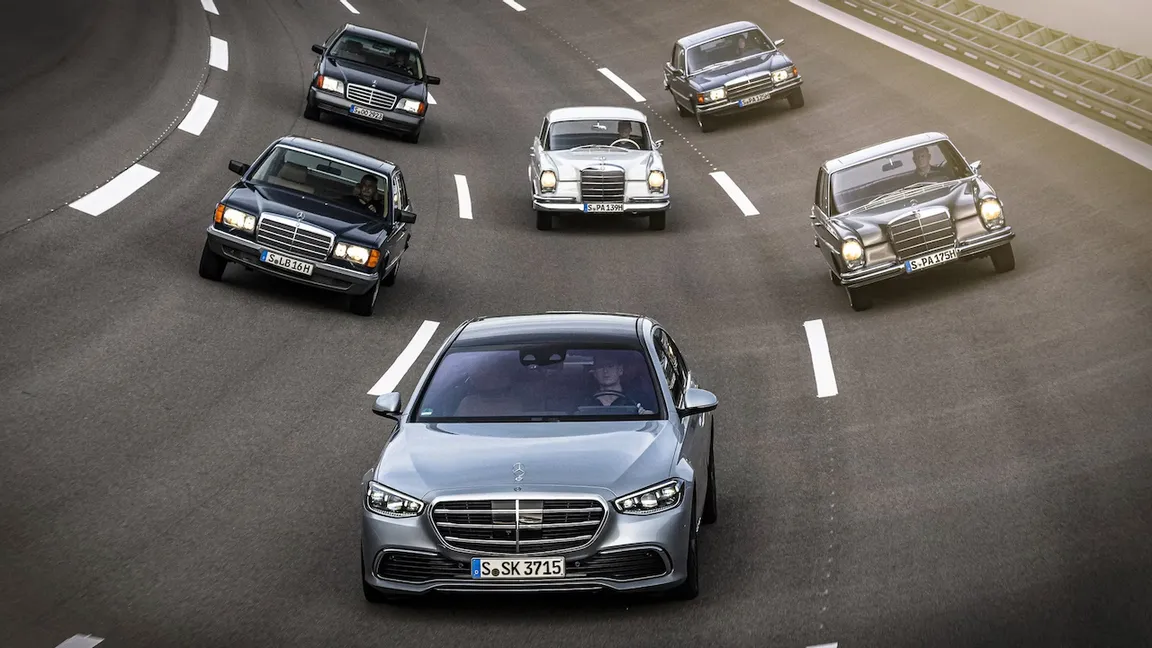
Across generations, the S-Class established itself as the industry’s reference point. It introduced technologies that later became standards: advances in passive and active safety, suspension and ride comfort, noise isolation, long-distance composure, and driver assistance. The pattern repeated over decades. The S-Class arrived first; the rest of the market followed.
Mercedes-Benz has established this position through 140 years of innovation, consistently setting benchmarks that shaped the modern automobile and the luxury segment.
Over time, this created something more durable than headlines or specifications. It built confidence through behaviour. Owners and passengers learnt that the car responded predictably, absorbed complexity quietly, and reduced uncertainty rather than adding to it. Luxury, in this sense, shifted from display toward assurance.
As that confidence settled, it turned into expectation—and expectation became the basis on which the S-Class established its authority.
Formalising the flagship
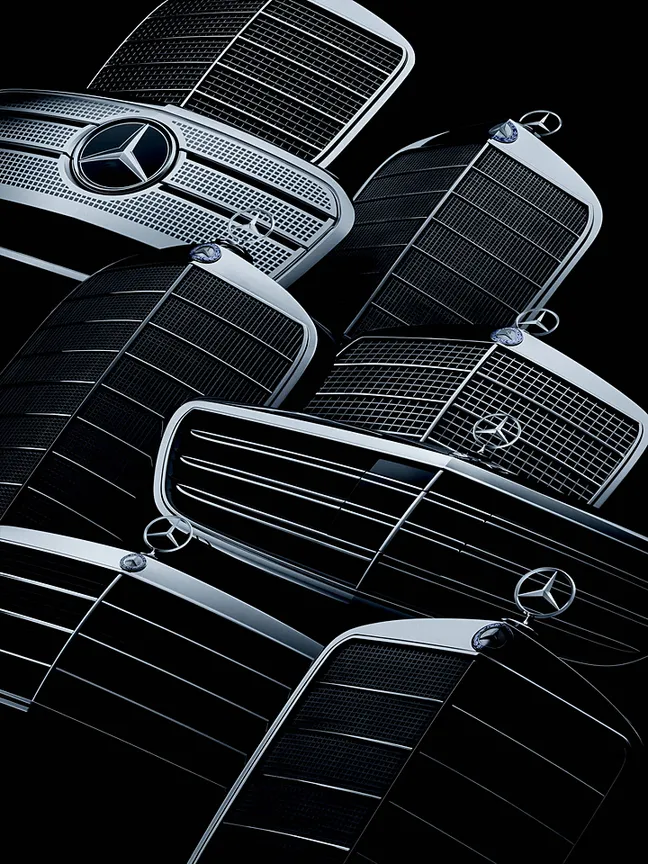
When Mercedes-Benz introduced the S-Class in 1972 with the W116 (W=Wagen, vehicle), it was clearly positioned as the brand’s flagship luxury saloon. By then, Mercedes already had decades of experience building top-tier limousines that defined their era.
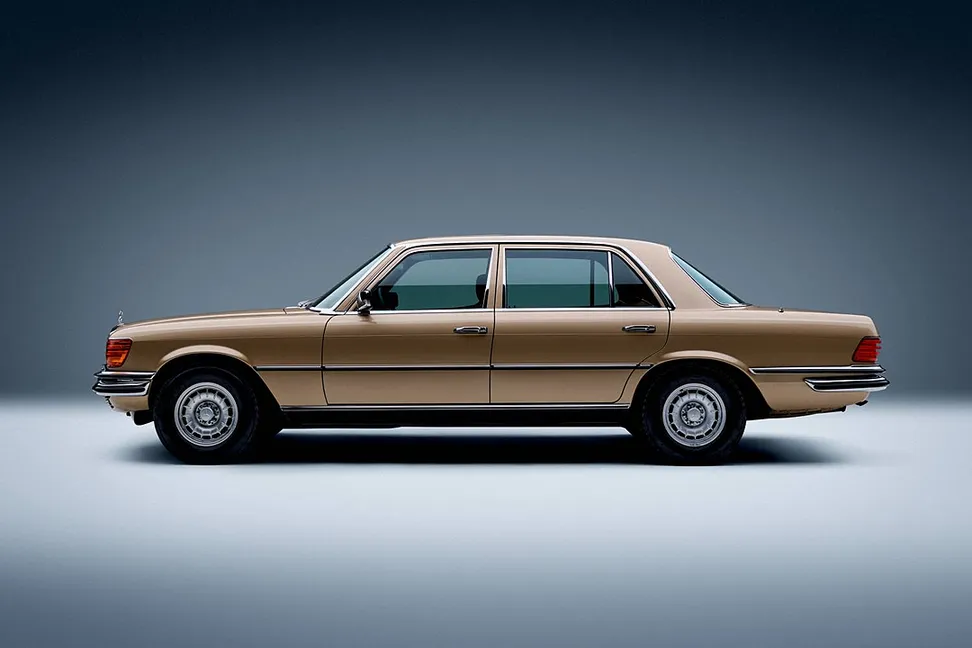
What the Sonderklasse designation accomplished was formalisation. It established a permanent reference line—the internal and external benchmark for what a Mercedes luxury saloon should deliver in safety, ride quality, comfort, and long-distance capability. From that point forward, the S-Class became the yardstick against which Mercedes would measure itself, generation after generation.
Since the official S-Class designation was introduced, Mercedes-Benz has sold approximately 4.5 million S-Class vehicles worldwide, underscoring that this definition of luxury translated not only into prestige but also into sustained global relevance.
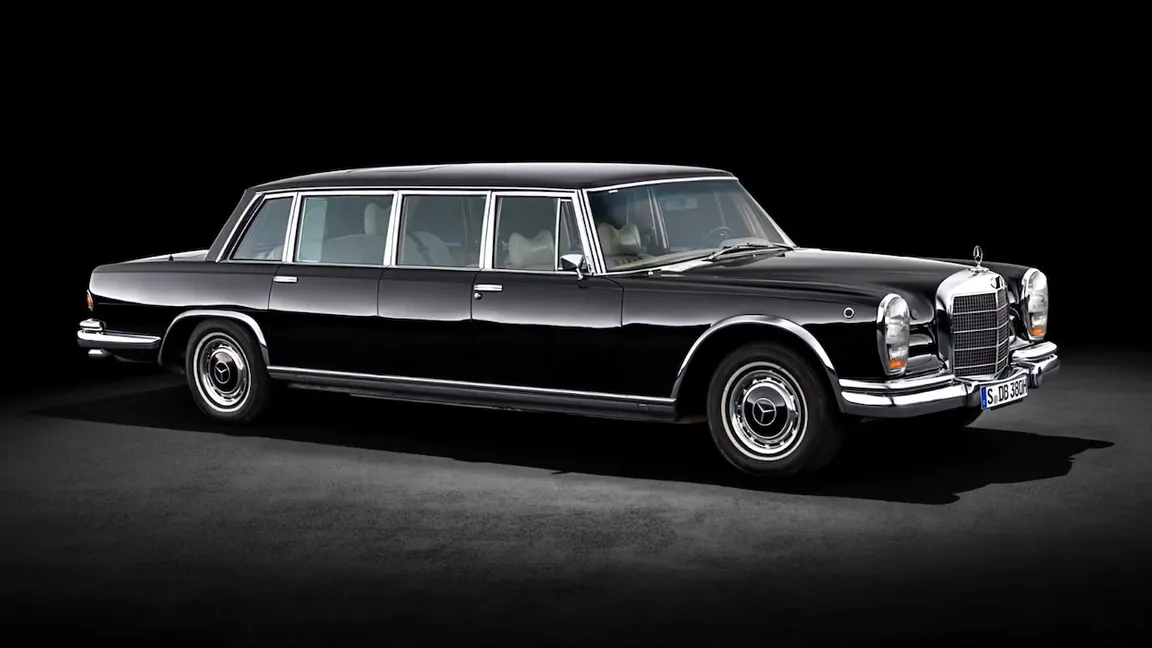
This flagship saloon tradition existed alongside a very different pinnacle. The Mercedes-Benz 600 (W100), produced from 1963 to 1981, occupied a level above the S-Class. It was an ultra-luxury limousine built for heads of state, industrial power, and ceremonial authority — the most expensive car in the world at its launch and still regarded by many historians as the greatest luxury automobile ever produced. For a period, the 600 and the early S-Class even coexisted, serving clearly separated roles.
The distinction matters. The S-Class defined the flagship saloon. The 600 represented sovereign luxury beyond classification.
When leadership becomes less demonstrative
The environment in which the S-Class operates today differs fundamentally from the one that shaped its early dominance.
Technical excellence has become widely accessible. Digital interfaces, advanced driver-assistance systems, electrification strategies, and performance metrics now populate the entire premium landscape. Many cars are competent. Several are impressive. Some are deliberately provocative.
In this context, novelty no longer establishes leadership alone. It is established by how convincingly technology supports everyday use.
Luxury clients today are informed, experienced, and confident in their judgement. They compare easily and they recognise quality quickly. They also recognise excess just as fast. As a result, the central evaluation question has shifted.
It is no longer, “Which car has the most technology?”
It has become, “Which car gives me the greatest sense of certainty over time?”
This shift reframes how the latest S-Class facelift should be understood.
Reassurance as the modern luxury signal
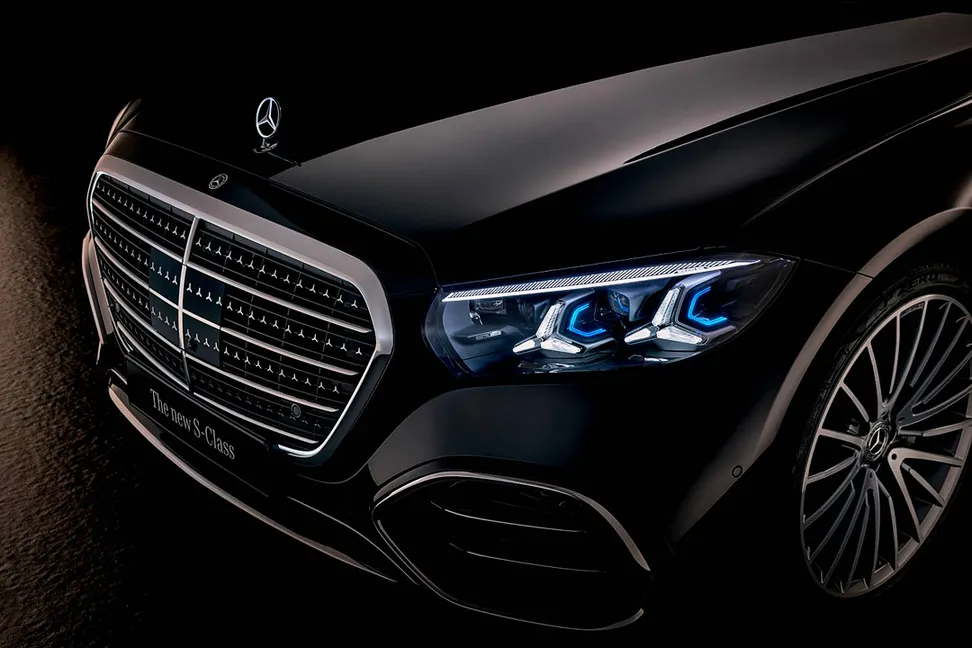
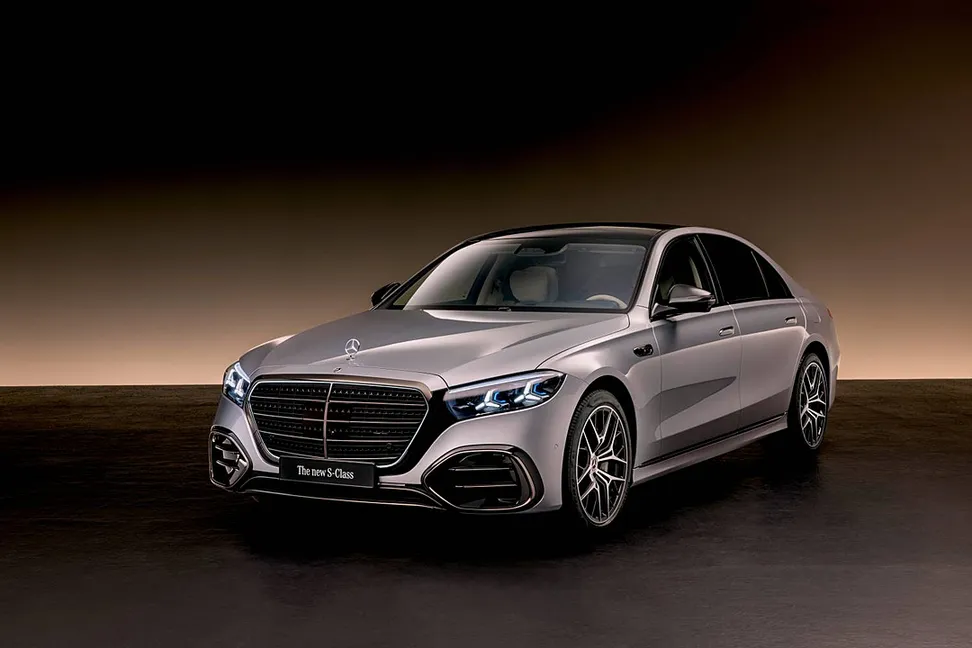
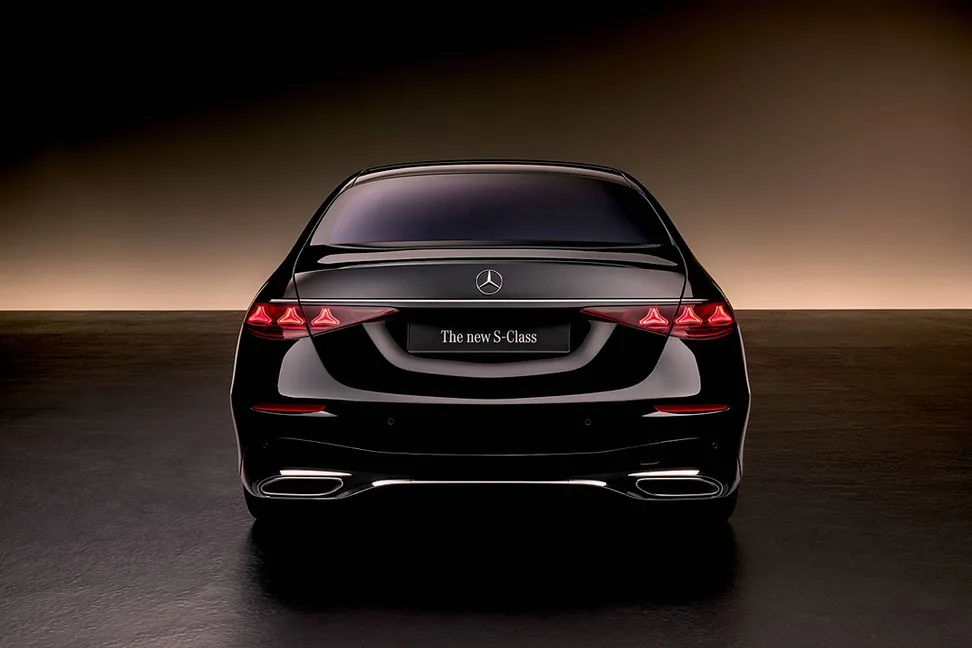
The updated S-Class does not attempt to reassert leadership through spectacle. There is no effort to shock, provoke, or theatrically redefine the segment. Instead, the car reinforces a philosophy Mercedes has refined for decades: luxury leadership expressed through calm authority.
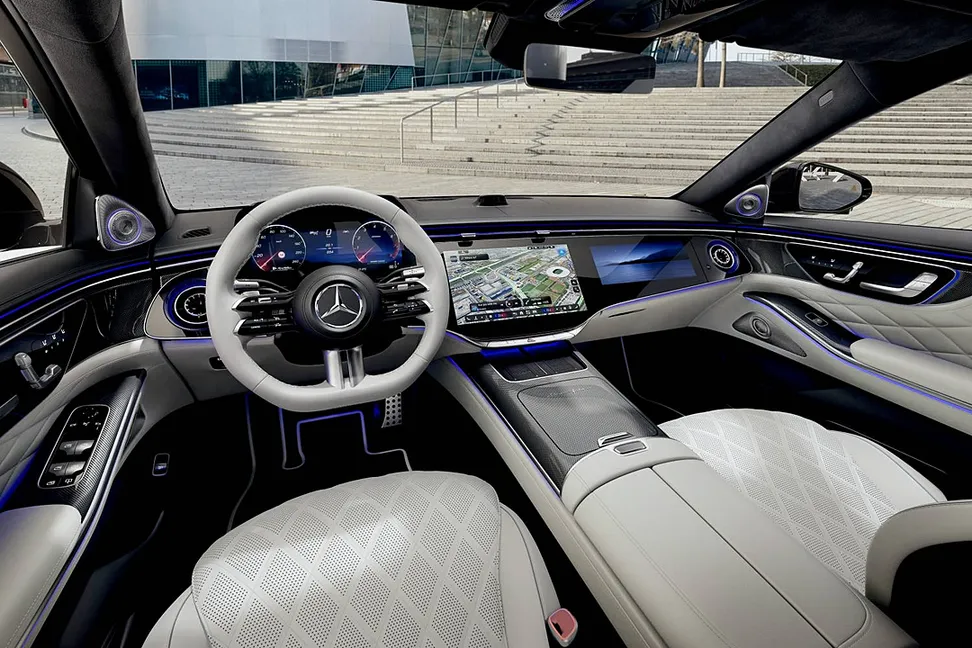
Technology remains essential, but it is deliberately restrained. Systems operate in the background. Interfaces reduce cognitive load rather than compete for attention. The S-Class behaves less like a device and more like an environment.
At this level, luxury is not about stimulation. It is about stability. It is about removing friction, ambiguity, and doubt. The S-Class positions itself not as a showcase, but as a constant.
Quiet engineering, deliberately orchestrated
This emphasis on reassurance explains the engineering direction of the current S-Class facelift.
- Active suspension systems capable of elevating the body in critical scenarios reflect a safety philosophy based on anticipation rather than reaction.
- Rear-axle steering reshapes the perception of size, reducing effort in dense urban environments.
- Aerodynamic efficiency supports silence and stability rather than spectacle, with a drag coefficient of 0.22—placing the S-Class ahead of cars such as the Porsche Taycan in aerodynamic performance.
- Advanced acoustic countermeasures work against vibration and road noise to preserve sensory balance.
- Digital climate systems adjust airflow discreetly, guided by stored preferences rather than continuous manual input.
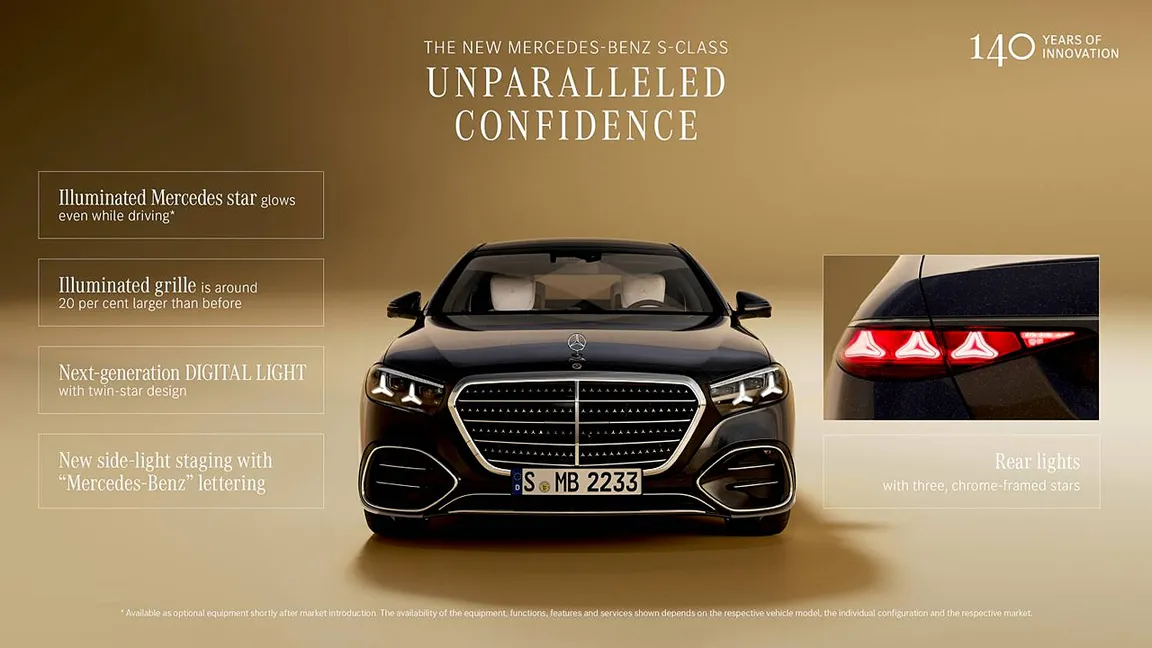
- High-precision lighting extends visibility with control rather than distraction.
- The integration of multiple AI-supported assistants prioritises conversational support over command-driven interactions.
Individually, these features appear technical. Collectively, they serve one purpose: preserving composure. Luxury here is defined not by what draws attention, but by what never interrupts the experience.
Asia, authority, and the S-Class position
This reassurance-driven approach is particularly relevant in Asia’s mature luxury markets.
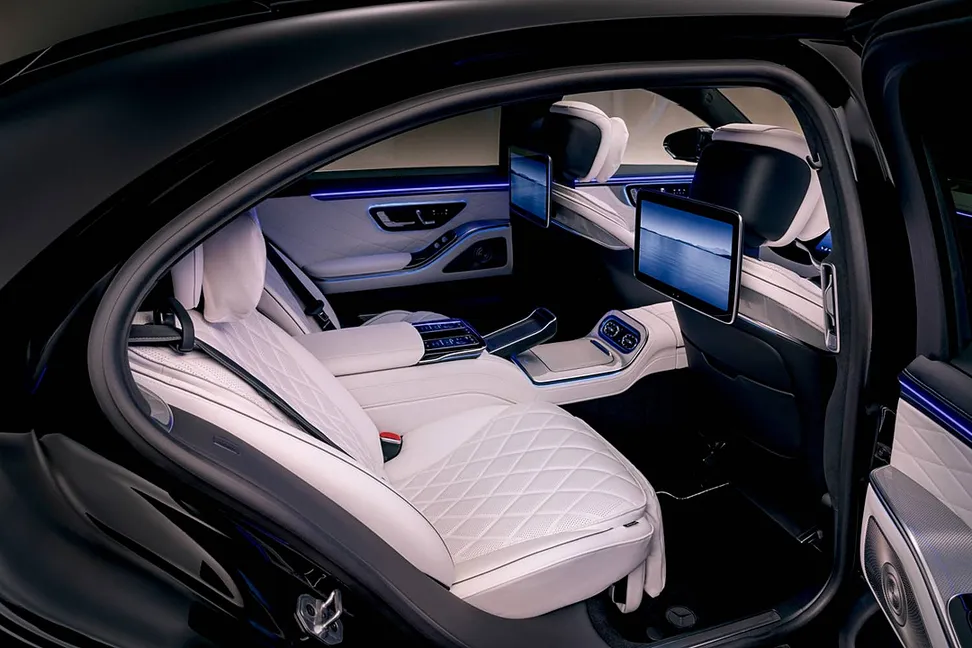
In cities such as Singapore and Hong Kong, the S-Class has long functioned as both personal transport and professional "infrastructure". Especially in China, chauffeur-driven use remains central. Rear-seat comfort, ride serenity, discretion, and presence carry more weight than visible innovation.
The S-Class communicates authority without ostentation. It signals success without explanation. It aligns naturally with environments where confidence is expressed through restraint rather than display.
At the same time, these markets are among the most demanding in the world. Competition has intensified. Client expectations have sharpened. Heritage alone no longer guarantees relevance. Even a benchmark must continually justify its position.
The facelifted S-Class responds not by changing character, but by refining it.
Maybach: ultra-luxury integrated, not isolated
Within this framework, the role of Mercedes-Maybach becomes clearer.
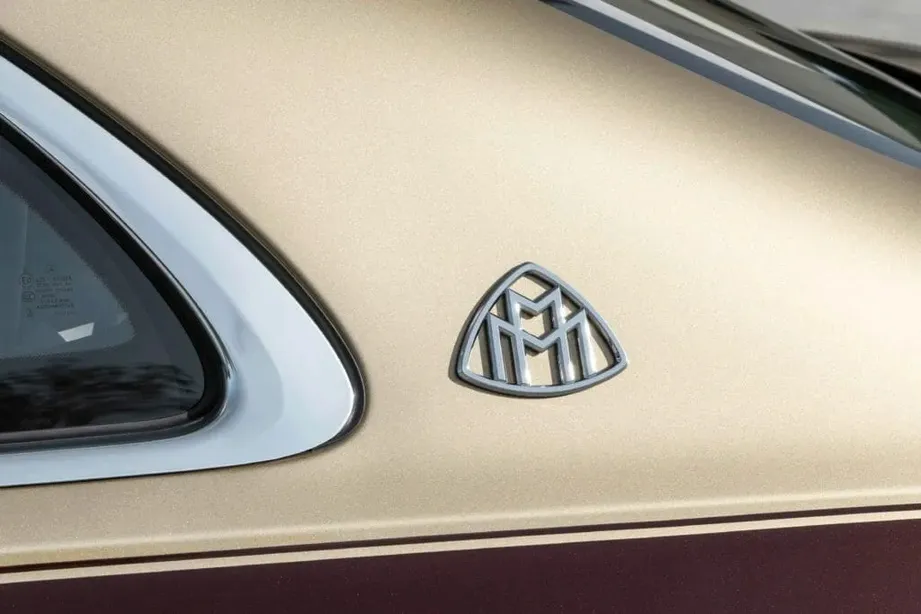
The Maybach name predates many contemporary luxury marques. Founded in 1909 by Wilhelm Maybach and renamed Maybach-Motorenbau GmbH in 1912—the origin of the double M emblem—it once represented the pinnacle of German engineering and automotive opulence, producing ceremonial vehicles for elites and heads of state.
Its modern positioning within the S-Class architecture is not about theatrical separation. It is about strategic integration.
This approach has proven resilient. In 2025, around one in three S-Class vehicles sold globally carried the Mercedes-Maybach designation, highlighting how ultra-luxury demand increasingly expresses itself within a trusted flagship framework rather than through standalone marques.
Engine downsizing has become standard across the industry, including in luxury segments. Where an S500 once relied on a naturally aspirated five-litre V8, it is now powered by a highly refined three-litre six-cylinder optimised for smoothness and efficiency.
At the same time, Mercedes recognises that the ultra-luxury segment still values the pinnacle of mechanical engineering. The availability of a V12 engine in the Maybach S 680—and Mercedes-Benz’s confirmation that this engine architecture will continue into the 2030s—represents a deliberate commitment. In an era characterised by electrification, this continuity has emerged as a significant differentiator at the top end of the market.
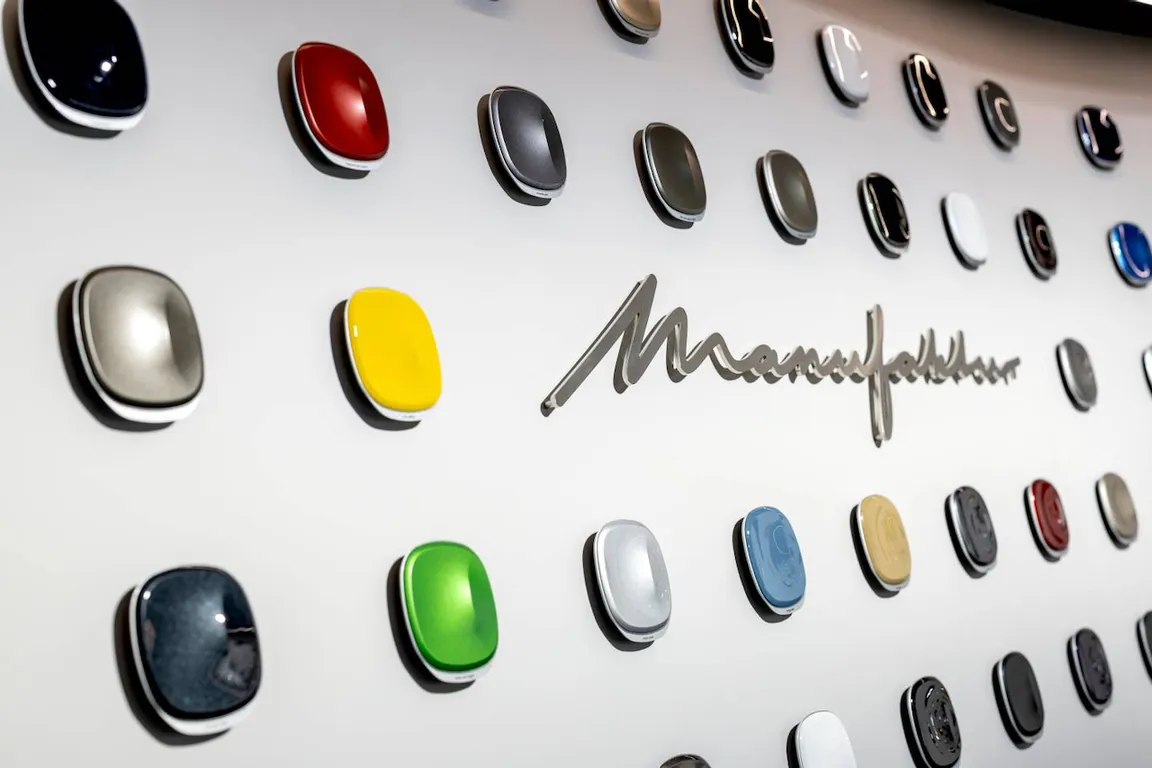
MANUFAKTUR and the defence of relevance
Against this backdrop, MANUFAKTUR plays a complementary role.
Personalisation has become a central battleground in the luxury industry. Bespoke programmes, limited editions, and coachbuilt narratives increasingly shape client expectations. MANUFAKTUR responds by offering calibrated individuality—allowing owners to express taste and identity while preserving coherence, credibility, and long-term value.
For discerning clients, the concept delivers emotional ownership. For Mercedes-Benz, it functions as a strategic defence against fragmentation, ensuring that personalisation strengthens rather than dilutes the S-Class proposition.
From dominance to reassurance
Viewed over time, the evolution of the S-Class is clear.
Earlier generations established leadership through visible engineering progress — new systems, new benchmarks, new firsts. Today, leadership is expressed differently. It shows up in how composed the car feels, how predictable it remains across situations, and how little effort it demands from the person inside.
The modern S-Class no longer asserts luxury through dominance. It earns it through control, continuity, and long-term confidence — qualities that remain rare, difficult to replicate, and increasingly expected at the very top of the segment.
From Engineering Leadership to Retail Execution
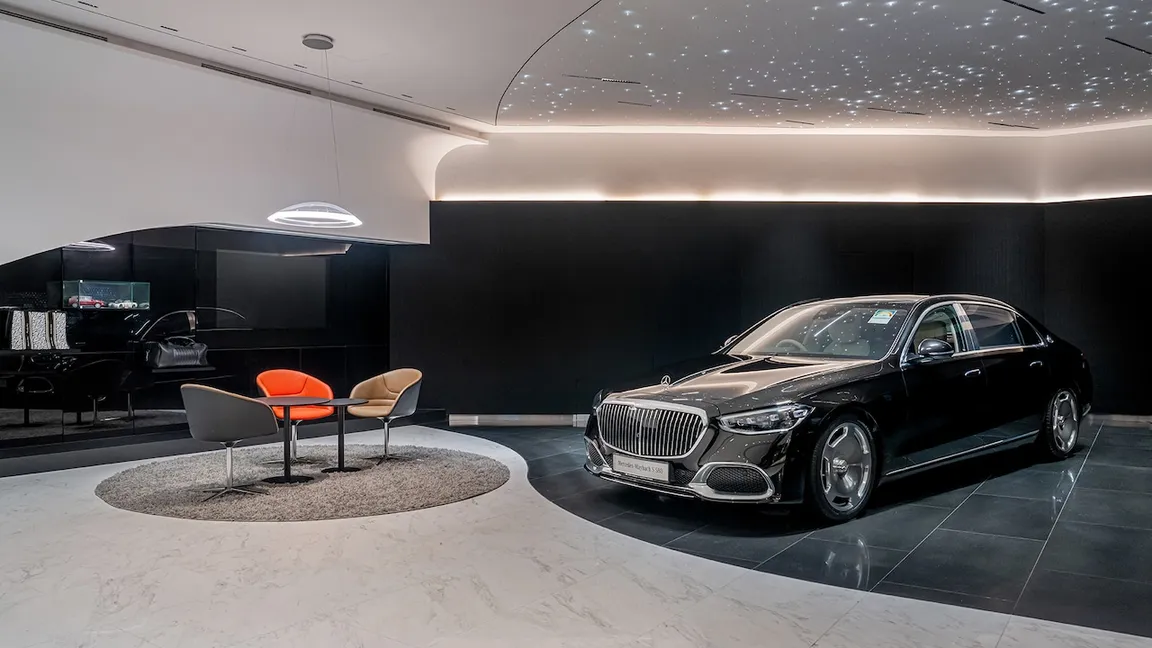
From a brand, product, and engineering perspective, the work has been done to secure the S-Class’s position at the top of luxury automotive. The decisive task now sits with retail organisations: translating this depth of innovation into tangible customer engagement, retail sales excellence, and premium customer experiences — this is exactly where my work with leadership and frontline teams comes in.
Through focused training, advisory work, and on-the-ground collaboration, this translation drives measurable sales effectiveness, stronger conversion, and more consistent premium performance at the retail level.
Closing reflections
The S-Class endures because it understands what luxury ultimately serves: the desire for reassurance, composure, and confidence in one’s choice.
As luxury markets mature—particularly in Asia—the brands that last respect their clients’ judgement, protect their time, and align with the rhythm of their lives. The S-Class does this through the refinement of behaviour rather than the amplification of presence.
Authority here expresses itself through consistency, restraint, and long-term credibility.
Strategic Q&A
How is the definition of automotive luxury changing?
Luxury has shifted from mechanical supremacy to emotional reassurance. In maturing markets, clients no longer just buy "the best machine"; they invest in brands that offer hyper-personalisation and a seamless digital lifestyle.
What is the role of AI in the future of luxury retail?
AI, such as the Mercedes-Benz MB.OS, acts as an enabler for customer-centricity. It allows brands to move from generic service to predictive, individualised experiences, which is the new benchmark for "Luxury" in Asia.
Why is individual relevance more important than brand heritage today?
While heritage provides trust, relevance provides the reason to buy. As markets mature, affluent customers seek products like 'MANUFAKTUR' that allow for personal expression, requiring leadership teams to translate brand strength into individual customer value.
All photographs used here serve purely as illustration. All rights remain with their original creators and owners.